
United Kingdom - Banknote Catalog
United Kingdom periods
Subcountries

About these banknotes
Unspecified currency
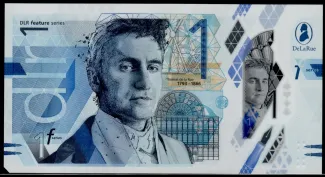
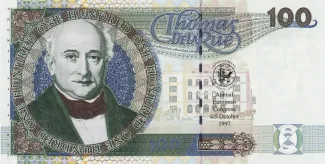
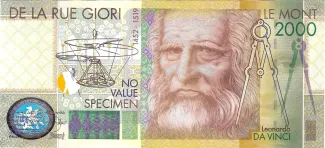
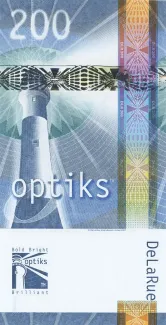
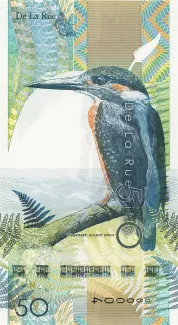
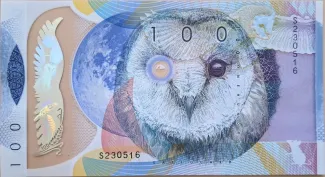
In the late 20th and early 21st centuries, the United Kingdom saw the production of specialised test notes by the security printing firm De La Rue. These pieces, denominated in undefined units or as Sterling Test Notes, were not legal tender but were created for internal trials and to calibrate automated teller machines. Issued between 1997 and 2016, they form part of the broader category of patterns and trials, representing the technical development of paper currency handling rather than circulating money.
Summary prepared with AI assistance.
The ABanknote catalog lists 6 banknote types from the United Kingdom Unspecified currency period in the category patterns and trials, issued between 1997 and 2016. They cover 2 denominations, with 11 varieties in total. The currencies involved are De La Rue, Undefined and Units De La Rue Test Note. In total the catalog holds 131 United Kingdom banknotes across 7 periods.
- Most valuable in this list: United Kingdom 0 Undefined, 2000 — $10,00 in UNC condition
United Kingdom
The United Kingdom has one of the world’s oldest continuous traditions of paper money, with early notes appearing in the late 17th century as receipts from goldsmiths and the newly founded Bank of England. For most of its history the currency was the pound sterling, divided into 20 shillings or 240 pence, and private banks as well as the Bank of England issued notes that circulated alongside coin. Scotland and Northern Ireland developed their own distinct note-issuing banks under separate legal frameworks, a practice that continues today.
Decimalization in 1971 replaced shillings and pence with 100 new pence to the pound, and the Bank of England gradually withdrew the old pre‑decimal series. Subsequent decades saw a shift from paper to polymer, updated portraits of the monarch, and the introduction of the King Charles III series. Throughout these changes the pound sterling has remained one of the most widely traded and recognized currencies globally.
Summary prepared with AI assistance.