
Peru - Banknote Catalog

About these banknotes
Real (1568-1858)
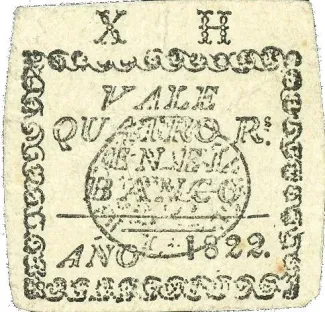
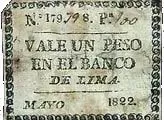
During the protracted struggle for independence from Spain, the nascent Peruvian republic saw its first experiments with paper money. The currency system was historically based on the silver Peso, divided into 8 Reales. In 1822, under the authority of the Emancipation Bank, a limited issue of paper notes was introduced to meet the fiscal demands of the liberation campaign. These early local banknotes represent a brief and tentative departure from the dominant coinage economy, circulating alongside traditional Spanish colonial specie before the eventual establishment of the Sol.
Summary prepared with AI assistance.
The ABanknote catalog lists 2 banknote types from the Peru Real (1568-1858) period in the category local banknotes, issued in 1822. They cover 2 denominations. The currencies involved are Peso and Reales. In total the catalog holds 163 Peru banknotes across 6 periods.
Peru
Peru’s paper money history reflects its political and economic transformations since independence. The earliest notes appeared under the Real system, though issuance remained limited. With the adoption of the Sol in 1863, paper currency expanded, supplemented by the Libra Peruana de Oro. During the War of the Pacific, the short-lived Inca Peruano was introduced. The Sol de Oro replaced the Sol in 1931 and served for over five decades, undergoing severe inflation.
Hyperinflation in the 1980s led to the Inti in 1985, which was soon replaced by the Nuevo Sol in 1991 to restore monetary stability. Renamed simply Sol in 2015, the currency continues to circulate. Across these periods, Peru has issued a wide variety of banknotes, reflecting its evolving national identity and economic challenges.
Summary prepared with AI assistance.