
Two Decades of Euro Banknotes: From First Series to Europa
· Source: Numismatic News
The evolution of euro paper money spans two series, distinct security upgrades, and a discontinued high denomination.
- Issuer
- European Central Bank
- First Series Denominations
- 5, 10, 20, 50, 100, 200, 500 euros
- Europa Series Denominations
- 5, 10, 20, 50, 100, 200 euros
- First Series Designer
- Robert Kalina
- Europa Series Designer
- Reinhold Gerstetter
- Substrate
- Pure cotton fibre
Euro banknotes first appeared on January 1, 2002, simultaneously in a dozen countries. The physical currency arrived three years after the euro became an accounting unit. Today, 21 nations form the eurozone, and four additional states—Andorra, Monaco, San Marino, and Vatican City—use the euro through formal agreements, though they cannot issue paper money.
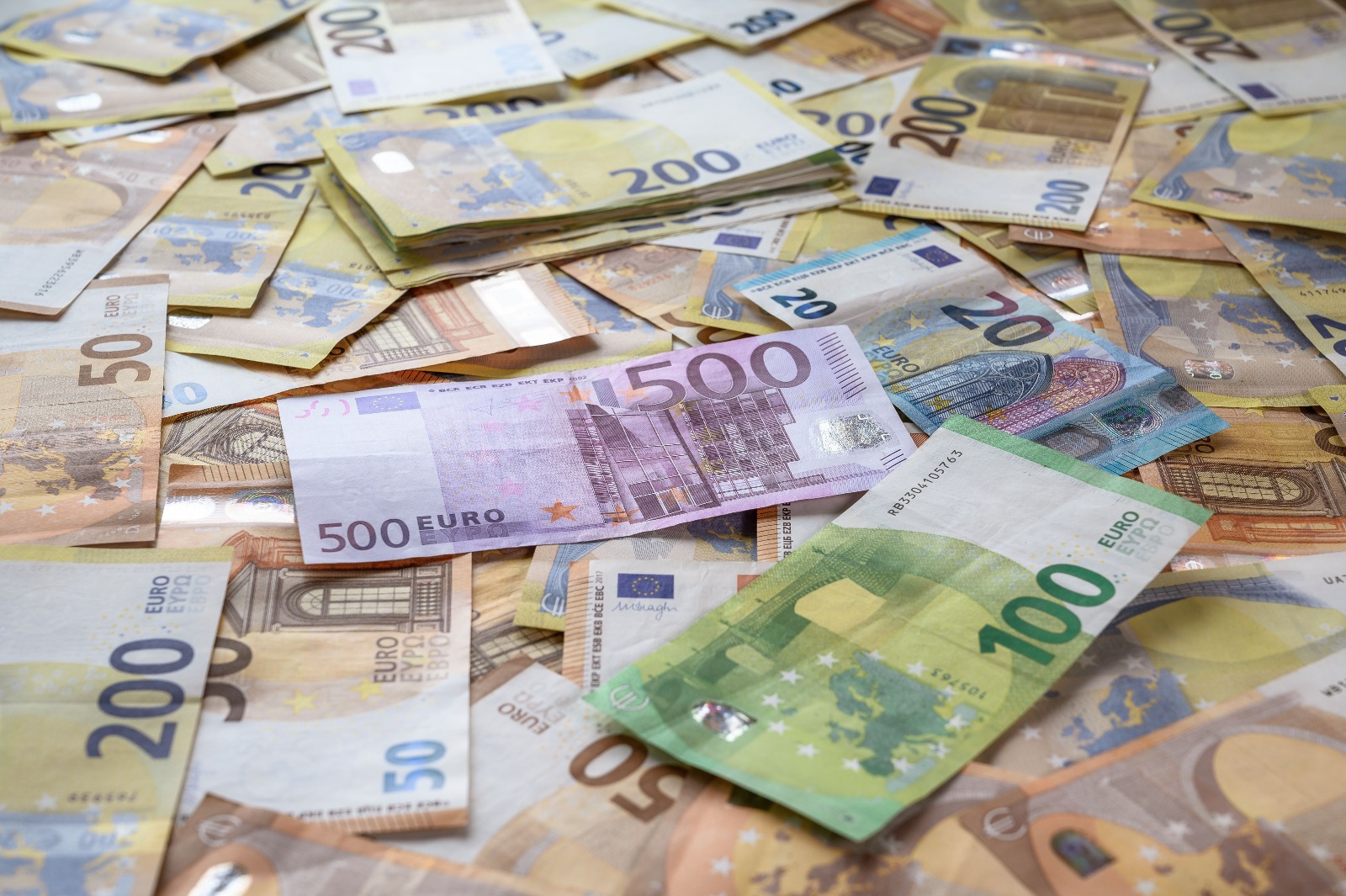
The original series, produced from 2002 until 2013, comprised seven values: 5, 10, 20, 50, 100, 200, and 500 euros. A second family, called the Europa series, began with the 5-euro note on May 2, 2013. The 10-, 20-, 50-, 100-, and 200-euro denominations followed gradually through 2019. On May 4, 2016, the European Central Bank decided against a 500-euro note for the new series, citing concerns about illegal activities. The last issuance of the first-series 500-euro note occurred on April 27, 2019. That note stays legal tender and can be swapped at any eurozone central bank.
Robert Kalina, an Austrian designer, won a 1996 contest and created the first series. His obverse designs depict windows and gateways, while the reverse shows bridges, each reflecting a different architectural period. The 5-euro note represents classical style, the 10-euro Romanesque, the 20-euro Gothic, the 50-euro Renaissance, the 100-euro Baroque and Rococo, the 200-euro Art Nouveau, and the 500-euro modern 20th-century architecture. Every note carries the year 2002, regardless of when it was actually printed. The ECB president’s signature—Wim Duisenberg, Jean-Claude Trichet, or Mario Draghi—indicates the issuance period.
Reinhold Gerstetter, a previous competition participant, redesigned the notes for the Europa series. The theme of architectural ages continues, but several elements changed. The currency name now appears in three alphabets: Latin, Greek, and Cyrillic. A watermark and hologram stripe incorporate the face of the mythological princess Europa. The year of issue is printed vertically on the front. The 100- and 200-euro notes were resized to 147 x 77 mm and 153 x 77 mm. The map on the back includes Cyprus and Malta, which were missing earlier. ECB acronyms appear in ten language variants, though the 5-, 10-, and 20-euro notes lack the Croatian version because Croatia joined the EU in July 2013, after those denominations were released. Signatures belong to Mario Draghi or Christine Lagarde.
All notes are made of pure cotton fiber and carry multiple security features: watermarks, microprinting, holograms, infrared and fluorescent patterns, and optically variable inks. First-series notes remain valid but are being progressively withdrawn from circulation.